Davide Veglia Killed in Miami Beach Boat Accident
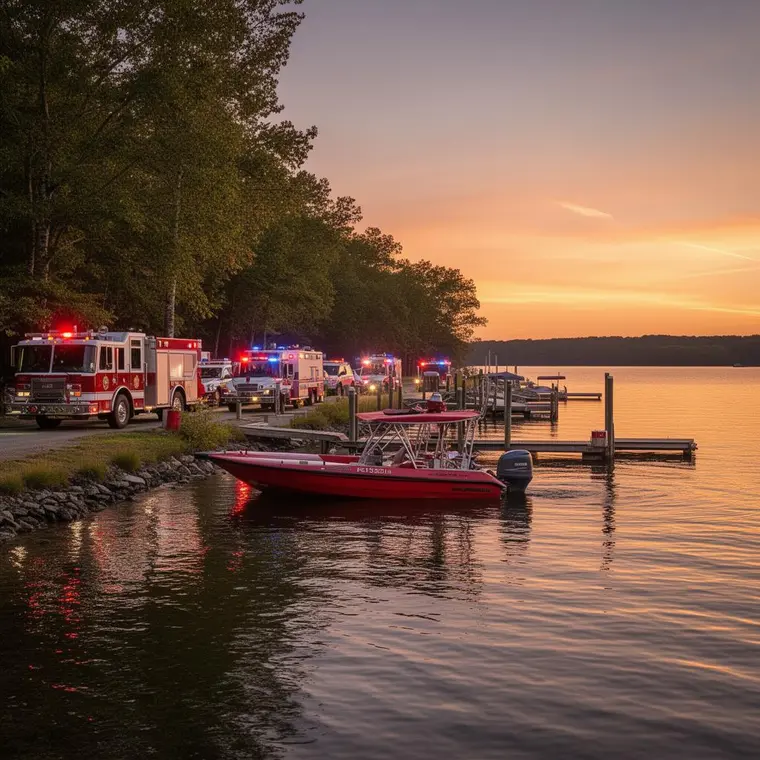
The fatal collision occurred in the Meloy Channel near Indian Creek and Biscayne Point Circle
Davide Veglia, 55, died after a hit-and-run boating collision Wednesday night in the Meloy Channel near Miami Beach, according to the Florida Fish and Wildlife Conservation Commission.
Investigators have located the larger vessel that fled the scene, but authorities have not yet confirmed the identity of the operator or announced criminal charges. The search for the person steering the boat remains active.
The unidentified vessel struck a 7-foot inflatable dinghy carrying Veglia and his 14-year-old son. The collision ejected both passengers into the water near Indian Creek and Biscayne Point Circle.
Bystanders heard calls for help and contacted police, who arrived within minutes. Paramedics rushed both victims to Jackson Memorial Hospital’s Ryder Trauma Center, where Veglia died and the teenager was treated for a broken arm.
The Italian soccer club Cesena FC released a statement mourning the 55-year-old, who was deeply involved in supporting the team.
The hit-and-run boating collision in the Meloy Channel, which resulted in the death of Veglia, highlights the complexities of marine accident investigations. the crash involved a larger, unidentified vessel striking a 7-foot inflatable dinghy, ejecting Veglia and his son into the water. The Florida Fish and Wildlife Conservation Commission (FWC) has located the larger vessel, but the operator's identity and potential charges have not been released.
National Legal Analyst Candice Bond, Managing Partner at Bond Legal. "Most people don't know that boats don't have brakes, so stopping depends entirely on the current and wind," Bond said. "This makes a sudden emergency on the water much harder to handle than in a car." This factor could be important in understanding the actions of the at-fault boat's operator before the collision.
What are the challenges in investigating a hit-and-run boat accident?
Investigating a hit-and-run boat accident, particularly one occurring at night in a channel like the Meloy Channel, presents several difficulties. Unlike road accidents, marine environments lack fixed landmarks for easy reconstruction, and currents can alter debris fields. Identifying the at-fault vessel and its operator often relies on witness accounts, debris analysis, and tracking vessel movements, which can be complicated if the operator flees the scene.
How do marine regulations differ from road traffic laws in accident investigations?
While both marine and road accident investigations aim to determine fault and cause, marine regulations have specific nuances. For instance, boating under the influence (BUI) laws are similar to DUI laws, but the effects of alcohol can be amplified on the water. The FWC's investigation will examine compliance with navigation rules, proper lookout, and vessel registration, among other marine-specific regulations.
What role do bystanders play in marine accident investigations?
In this incident, bystanders heard calls for help and contacted authorities, leading to a rapid response. Their observations regarding the collision, the vessels involved, and the immediate aftermath can provide important details for investigators. Witness statements are often key in hit-and-run cases, helping to identify the fleeing vessel and its operator.
Florida wrongful death statute
Under Fla. Stat. § 768.16-768.26, surviving family members may file a wrongful death action. Florida applies modified comparative fault (51% bar). The statute of limitations is 2 years from the date of death.
Recoverable damages may include loss of support and services, loss of companionship, mental pain and suffering of survivors, and medical/funeral expenses.