Davin Smith Killed in Douglas County Commercial Vehicle
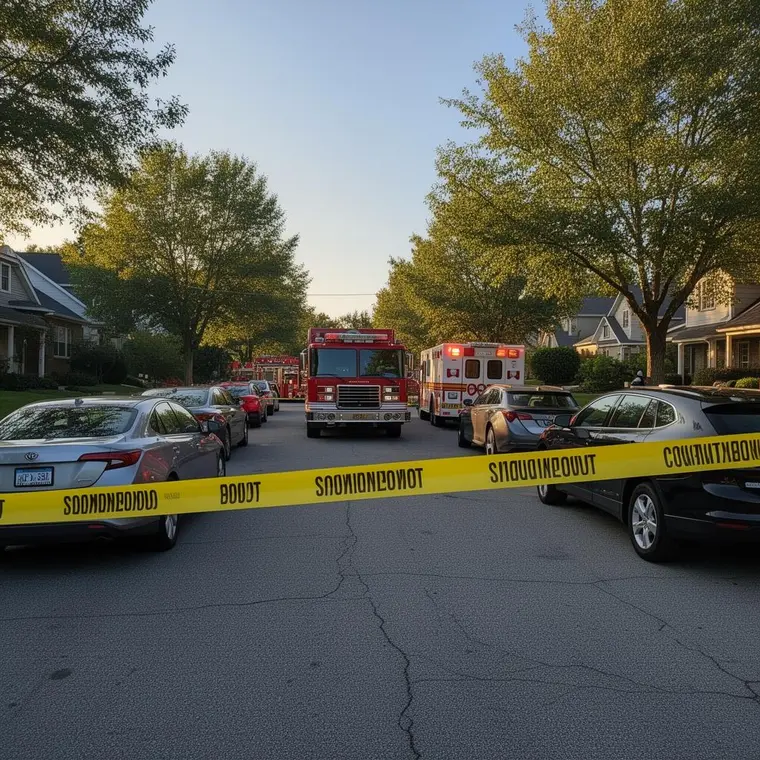
Trucker charged with DUII and manslaughter after I-5 crash
Davin Smith, 18, was killed in a commercial vehicle accident on Interstate 5 near milepost 90 in Douglas County, Oregon, on Monday, according to the State Police.
Brenden Christensen, 61, was arrested and charged with DUII and manslaughter in connection with the crash, police said. Christensen was driving a white Freightliner commercial motor vehicle hauling a loaded trailer that stalled in an uphill lane near Canyonville. The Freightliner was struck by a maroon Honda CRV, driven by Smith.
Smith was pronounced dead at the scene. Two passengers, Lawrence Smith, Jr., 60, and Annika Smith, 18, were airlifted to a local hospital with serious injuries. A third passenger, Ivan Gonzalez, 19, was hospitalized with minor injuries. Impairment was a factor in the accident, the OSP reported.
The fatal crash on Interstate 5 highlights the consequences when commercial vehicles are involved in accidents. Investigations into commercial vehicle accidents often require significant experience to determine liability, especially when impairment is a factor.
"We can help protect your rights and prevent your statements to the police and insurance companies from being used against you." said Candice Bond, Managing Partner at Bond Legal. "Electronic logs don't lie, and they clearly show if a driver skipped mandatory breaks before a fatal wreck happened."
What do investigators look for in commercial vehicle crashes with stalled vehicles?
When a commercial vehicle stalls on an uphill grade, crash investigators examine several factors, including vehicle maintenance records, driver logs, and the truck's event data recorder. They also review witness statements and evaluate road conditions to understand the sequence of events leading to the collision, especially when impairment is suspected.
What rights do families of victims have after a DUI commercial vehicle accident?
The family of Smith, along with the injured passengers, face a complex legal journey. In cases of commercial vehicle accidents involving alleged driving under the influence, victims and their families have the right to seek justice through civil claims. This includes pursuing compensation for medical expenses for the injured, funeral costs for those who died, and other significant damages. Stefano Formica, Of Counsel at Bond Legal, noted that "When a massive truck is involved in a fatality, the loss ripples through the entire town. Electronic logs are vital because they can't be erased and show exactly how long a driver was behind the wheel."
Oregon wrongful death actions
Oregon law allows certain surviving family members to file a wrongful death action following a fatal incident. Under Oregon Revised Statute § 30.020, such claims can be brought by the personal representative of the deceased's estate on behalf of beneficiaries. These beneficiaries typically include a surviving spouse, children, or parents, depending on the specific circumstances.
Damages that may be sought in a wrongful death claim can include economic losses such as the loss of financial support the deceased would have provided, medical expenses incurred before death, and funeral and burial costs. Non-economic damages, such as loss of companionship, comfort, and society, may also be recoverable.
Comparative fault and commercial vehicle liability in Oregon
Oregon operates under a modified comparative fault system, meaning that a claimant's ability to recover damages is limited if their own negligence contributed to the crash. If the deceased is found to be 51% or more at fault, recovery is barred. If the deceased is found to be less than 51% at fault, any damages awarded would be reduced proportionally to their degree of fault.
In cases involving commercial vehicles, additional layers of liability may apply. Commercial carriers are subject to federal regulations enforced by the Federal Motor Carrier Safety Administration (FMCSA), which govern aspects such as driver hours of service, vehicle maintenance, and driver qualifications. Violations of these regulations could indicate negligence on the part of the carrier or driver. Bond noted that understanding these regulations is important for families seeking to determine liability after a fatal commercial vehicle accident.
Statute of limitations for wrongful death claims in Oregon
A wrongful death claim in Oregon must generally be filed within a specific timeframe, known as the statute of limitations. Under Oregon law, a wrongful death action typically must be begin within three years of the date of the injury that caused the death. There can be exceptions to this rule, depending on the specifics of the case, which may alter the filing deadline.