Justin Twitchell Injured in South Bristol Pedestrian Accident – Legal Insights
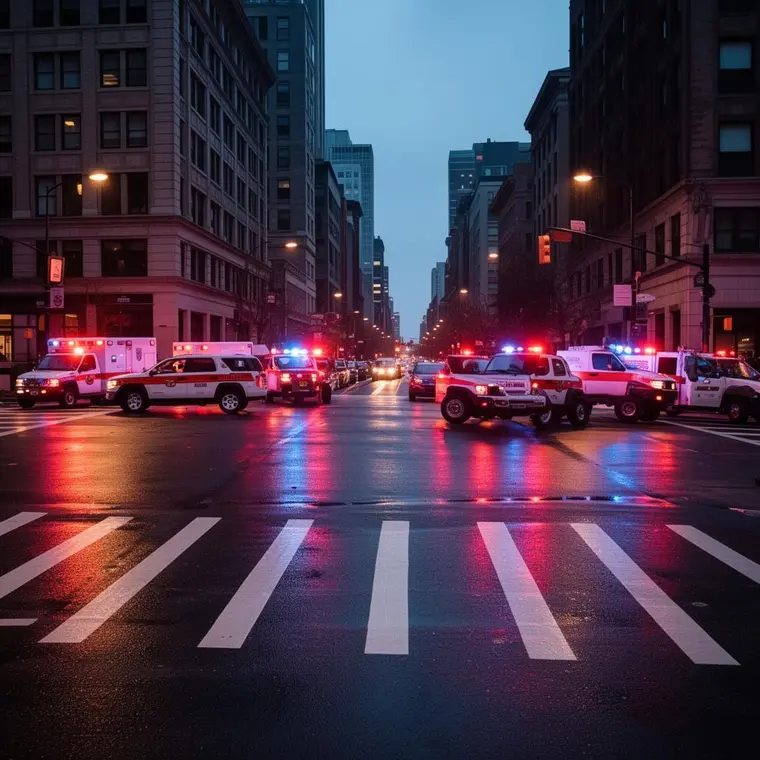
Pickup truck struck pedestrian on State Route 64 in Ontario County.
Justin Twitchell, 36, of Canandaigua, was struck by a pickup truck on State Route 64 in Ontario County on Monday evening, according to the Ontario County Sheriff’s Office.
Terry S. Cole, 59, also of Canandaigua, was driving a 2008 GMC Sierra southbound when he struck Twitchell, who was walking near the northbound lane. Deputies responded to the scene at approximately 6:03 p.m. to 6017 State Route 64 South for a reported pedestrian collision.
Twitchell suffered serious but non-life-threatening injuries. Mercy Flight airlifted him to Strong Memorial Hospital in Rochester for emergency medical treatment.
State Route 64 was closed for about three hours as deputies conducted accident reconstruction and processed the scene. The cause of the pedestrian accident remains under active investigation by the Ontario County Sheriff’s Office.
How do investigators reconstruct a pedestrian accident like this one on State Route 64?
Investigators on the scene of a pedestrian accident, such as the one that injured Justin Twitchell on State Route 64, careful collect evidence to determine liability. This often includes examining vehicle damage, roadway conditions, and witness statements. Crosswalk signal timing research shows that standard pedestrian intervals frequently fail to accommodate elderly or mobility-impaired crossing speeds, creating a measurable gap between design assumptions and real-world conditions. These detailed reconstructions help establish the sequence of events leading to the collision.
What factors contribute to pedestrian accidents in rural areas?
Rural pedestrian accidents present unique challenges, often involving higher speeds and limited lighting. While all of us are advised to be careful, the burden of responsibility often falls on people driving or riding in vehicles. According to the Governors Highway Safety Association, preliminary data shows that U.S. pedestrian death decreased by 4.3% in 2024 from the previous year. However, incidents like this one underscore the importance of driver awareness, especially in areas where pedestrians may be present near roadways. National Legal Analyst Stefano Formica, Of Counsel at Bond Legal, added that "The thing about road geometry is that a curve that's not banked correctly will pull a car off the road. It doesn't matter how careful you are if the engineering doesn't help keep your tires on the pavement." These factors can contribute to tragic outcomes for vulnerable road users.
New York personal injury framework
New York follows a pure comparative fault system with no-fault auto insurance. The statute of limitations is 3 years.
Under New York's no-fault system, PIP benefits cover medical expenses and lost wages up to $50,000 regardless of fault. To pursue a liability claim, injuries must meet the 'serious injury' threshold under Insurance Law § 5102(d).
National Legal Analyst Candice Bond, Managing Partner at Bond Legal, noted that "Understanding the specific elements of negligence and how they apply in pedestrian accident cases is crucial for securing a favorable outcome.