Deadly Miami Boat Accident: FWC Identifies Vessel in Hit-and-Run
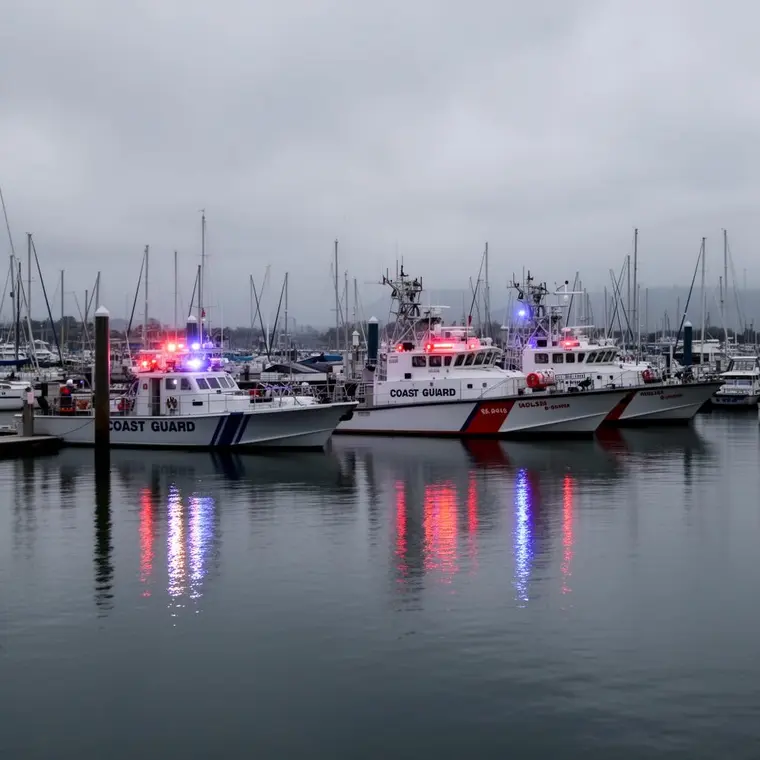
The Florida Fish and Wildlife Conservation Commission (FWC) has located a boat believed to be involved in a fatal hit-and-run crash that killed Davide Veglia. Officials say the crash happened last Wednesday night while Veglia and his 14-year-old son were on an inflatable dinghy near Indian Creek and Biscayne Pointe.
Davide Veglia, 55, died Wednesday night when an unidentified boat struck his inflatable dinghy near Indian Creek and Biscayne Pointe in Miami, Florida, according to the Florida Fish and Wildlife Conservation Commission. The hit-and-run crash happened while Veglia was on the water with his 14-year-old son.
Veglia's son survived the crash but suffered a broken arm, authorities said. The unidentified boat fled the scene after the crash, leaving Veglia and his son in the water.
A witness on shore heard the crash and called emergency dispatchers after seeing the two in distress. Paramedics rushed Veglia and his son to Jackson Memorial Hospital, where Veglia was pronounced dead.
Investigators later located a boat in connection with the hit-and-run, but have not identified the driver, police said. The FWC is investigating the hit-and-run case. No arrests have been made in the hit-and-run case.
The Florida Fish and Wildlife Conservation Commission (FWC) is investigating the fatal boat accident that killed Davide Veglia. Investigators are reviewing maintenance records and GPS data to find out if mechanical problems or operator error caused the boat to become unstable. Legal analysts often consider kill switch mechanisms or steering linkage failures in these situations. Data from the U.S. Coast Guard shows that operator inattention and improper lookout are often main factors in recreational boating accidents across the country.
In the hit-and-run investigation involving an inflatable dinghy, authorities have focused on finding a suspect vessel after a search. National Legal Analyst Stefano Formica, Of Counsel at Bond Legal, said, "When any road or water accident turns fatal, the state's ‘wrongful death' laws provide the framework for how the case is handled. These rules define who can take action on behalf of the deceased and what types of losses the legal system will recognize."
Early documentation of the scene and witness statements, such as those from bystanders who called 911, are important for investigators trying to establish a timeline. The absence of standard roadway lighting on the water makes visibility difficult, often making it hard for operators to see smaller vessels like dinghies at night.
Florida maritime and wrongful death laws
Under Florida’s wrongful death statute (F.S. § 768.16-768.26), the personal representative of a decedent’s estate may bring a civil action to recover damages for surviving family members when a death is caused by a wrongful act or negligence. In boating accidents occurring on navigable waters, these claims may also be influenced by federal maritime law, which can alter traditional liability standards and damage caps.
National Legal Analyst Candice Bond of Bond Legal noted that "On the water, fatal accidents are often governed by maritime law, which is a completely different set of rules than what we use on land."
In Florida, these legal actions typically seek compensation for the loss of support and services, loss of companionship, and mental pain and suffering from the date of injury. The statute of limitations for filing a wrongful death claim in Florida is generally two years from the date of death, making prompt legal review essential to preserving the rights of the surviving family.