Eliga Magok Joseph Majak Killed in Greensboro Accident
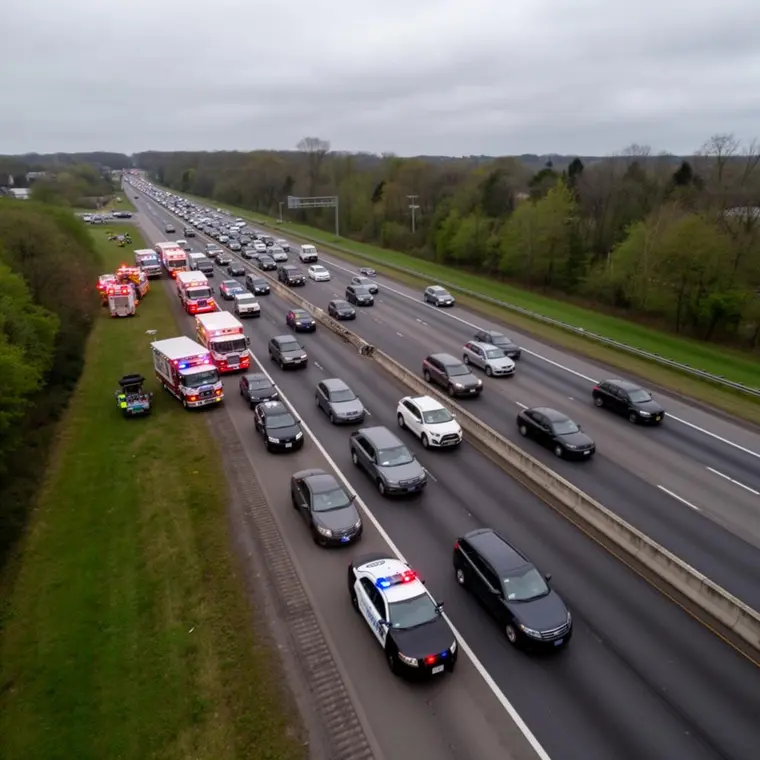
Fiery wrong-way collision on U.S. 29 near Reedy Fork Parkway leaves two dead and one severely injured
Eliga Magok Joseph Majak, 30, died March 7, when the car he was in crashed head-on into an SUV on U.S. Route 29 near Reedy Fork Parkway in Greensboro, according to the North Carolina State Highway Patrol. A gray Honda Odyssey traveling the wrong way struck a black Infiniti SUV at about 8:37 p.m. Investigators said a post-crash fire destroyed the van, which initially made identification difficult. The driver of the Honda was identified as Jabarie Leon Bracey, 29, and Majak was a passenger in the Honda. Thomas Lamond Davis of Laurel, Maryland, the driver of the Infiniti, suffered serious injuries in the wreck. Paramedics took Davis to Moses Cone Hospital. Authorities pronounced Bracey and Majak dead at the scene. Investigators confirmed the identities of the dead on March 13 through dental records by the North Carolina Medical Examiner’s Office. The road closed for several hours while troopers documented the scene and removed the wreckage. Authorities have not said if impairment played a role in the driver traveling against traffic. The agency is investigating how the Honda entered the highway in the wrong direction.
In fatal car accidents such as this one, the force of a head-on impact often leaves investigators with a complex scene that requires specialized forensic techniques to resolve. Candice Bond, Managing Partner at Bond Legal, noted that "In addition to the diligent work of law enforcement, an attorney can re-interview important witnesses, analyze any surveillance video from the scene of the crash and obtain phone and texting records of the liable party. Serving as an advocate, an attorney can help compassionately guide a family who has lost a loved one during this difficult time, as well as protect their legal rights and best interests." In this Greensboro collision, the post-crash fire added a layer of difficulty that necessitated the North Carolina Medical Examiner’s Office to turn to dental records for positive identification of the occupants in the fault-bound vehicle.
What caused the wrong-way crash?
Investigators with the North Carolina State Highway Patrol are currently looking into why the Honda was traveling in the incorrect direction. Law enforcement frequently examines toxicology reports and phone records in wrong-way incidents to determine if impairment or distraction played a role in the driver entering the highway against traffic flow.
When analyzing head-on collision patterns, safety analysts often look for infrastructure issues like missing signage or poorly lit exit ramps that can confuse motorists. Stefano Formica, Of Counsel at Bond Legal, observed that "Many deadly accidents happen because of 'road geometry'—the way an intersection or curve is designed that might make it hard for drivers to see each other. News reports often focus on driver error, but sometimes the road itself has a history of problems that haven't been fixed." Highway safety data from the NCDOT indicates that Greensboro has experienced other fatal incidents on major arteries like U.S. 29, highlighting a need for continued review of local traffic patterns.
Protecting the rights of victims
For the survivor of the Infiniti, the road to recovery often involves significant medical and financial hurdles. Beyond the immediate physical trauma, victims often face administrative challenges with insurance companies while attempting to secure compensation for long-term care. Legal analysts emphasize that securing a police report and following a structured medical treatment plan are the first steps toward building a case for recovery. Data from the NHTSA shows that while vehicle safety technology has improved, head-on collisions at highway speeds remain among the most dangerous incidents on American roads, often resulting in life-altering injuries for those who survive.
North Carolina wrongful death statute
North Carolina General Statute § 28A-18-2 allows for a wrongful death claim when a death results from another party's "wrongful act, neglect or default." Under this statute, the administrator of the deceased's estate may pursue damages. These damages can include funeral expenses, medical costs related to the fatal injury, and compensation for the loss of the victim’s net income and companionship. Bond noted that legal frameworks for fatal crashes often consider the impact on surviving family members, sometimes including provisions for the pain and suffering experienced by the deceased before death.
Contributory negligence in North Carolina
North Carolina operates under a strict contributory negligence doctrine. This legal principle can prevent a claimant from recovering damages if they are found to be even partially responsible for the crash that caused the death. Establishing clear liability often requires a careful analysis of evidence collected by the North Carolina State Highway Patrol and medical examiners. For wrongful death claims, the statute of limitations in North Carolina is two years from the date of death. This differs from the three-year period typically allowed for standard personal injury claims.